
Custom software should not be the first answer to every problem. In many cases, an existing tool can solve 80% of the need with lower investment and risk. The decision changes when the remaining 20% contains a significant share of the business value — common in sectors like agriculture or logistics, where the real operation rarely fits neatly into a generic system built for a different industry.
Is the process truly differentiating?
If every competitor operates with the same tools, building something custom may not change the outcome. But when customer experience, operating speed or decision quality depend on a unique process — how a delivery route gets built, how a batch is tracked end to end — software can become a real advantage.
Custom software is valuable when it captures a unique way of doing things better.
What happens when the problem is fragmentation, not a lack of tools?
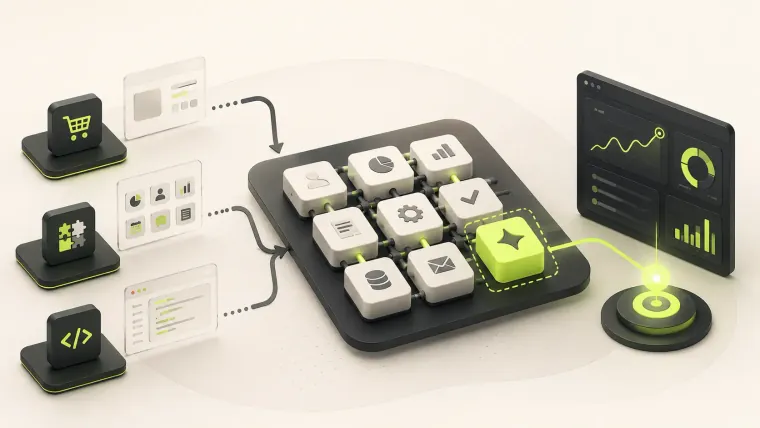
Sometimes the problem is not a lack of tools, but fragmentation. When sales, operations, administration and dispatch work across isolated systems — or straight out of spreadsheets nobody keeps in sync — an integration layer can create more value than replacing everything.
Argentine agriculture is a good example of that tension: it accounts for 23% of the country's GDP and drove 60% of exports in 2025, yet much of the day-to-day management of stock, traceability and dispatch still runs on loose spreadsheets and systems built for a different kind of business.
What hypothesis does the project need to validate?
Before committing to a long development effort, define the expected behavior, savings or improvement. A well-scoped pilot is not a small version of the final system: it is the most direct way to learn whether the core hypothesis is correct before rolling it out across the whole operation.
Building without planning for maintenance has a cost that shows up later: according to McKinsey, 10% to 20% of the technology budget allocated to new products ends up spent resolving technical debt, and that debt can represent 20% to 40% of the value of a company's entire technology estate.
The final decision
Buying, integrating and building are not mutually exclusive. The best architecture often combines existing tools with custom components at the points where the business needs more control, differentiation or room to evolve.